
Among the Sensex firms, HDFC, HDFC Bank, Mahindra & Mahindra, Kotak Mahindra Bank, Bharti Airtel, Tata Motors, Reliance Industries and Maruti were the biggest laggards. Bajaj Finance, State Bank of India, NTPC, Hindustan Unilever, Titan, Infosys, Bajaj Finserv, Wipro, Asian Paints and Tata Consultancy Services were among the major gainers.

Re-rating of Axis Bank's stock may continue in the near-future, believe analysts, as the risk-reward on the stock remains favourable amid healthy financials. The bullish stance comes after the Mumbai-based lender delivered a strong outperformance in the March quarter of fiscal year 2023-24 (Q4FY24) on core pre-provision profit and net profit, with improving asset quality. Axis Bank's net interest margin (NIM) expanded, against expectations, even in a tough market.

After a sequential fall in November, due to high base and waning of the festival season effect, credit card spends have picked up again in December, recording over Rs 1 trillion for the 10th consecutive month. Latest figures released by the Reserve Bank of India (RBI) show that credit card spends in December 2022 touched Rs 1.26 trillion, up 10.21 per cent compared to November. And, on a year-on-year (YoY) basis, spends were up 34.31 per cent during this period.

'I find the RBI edict to the Kotak Mahindra Bank to reduce Uday Kotak's shareholding very unreasonable,' says Sudhir Bisht.

'For experienced and risk-taking investors, now may be the time to go all in.' 'By 'experienced and risk-taking', I refer to those who remained net buyers in equities during the early stages of the 2020 pandemic.' 'On the other hand, those who exited the markets during the pandemic may go the SIP way.'

Mutual funds recorded Rs 7,600 crore net inflows into active equity schemes in July even as redemptions surged to a 30-month high of Rs 30,400 crore owing to profit booking, reveals data from the Association of Mutual Funds in India (Amfi). Equity net inflows were 13 per cent lower compared to the preceding month's tally. The inflows were supported by a strong flow from retail investors through the systematic investment plan (SIP) route.
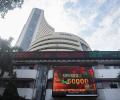
The top 10 valued firms added a total Rs 1,56,317.17 crore to their market valuation last week, helped by across the board rally which catapulted the benchmark index Sensex to the record 60,000 mark for the first time. During the last week, the 30-share BSE benchmark rallied 1,032.58 points or 1.74 per cent. The BSE Sensex made history on Friday by reaching the 60,000-mark for the first time ever. The market capitalisation (mcap) of Reliance Industries zoomed Rs 58,671.55 crore to reach Rs 15,74,052.03 crore. The m-cap of RIL went past Rs 16 lakh crore mark in intra-day trade on Thursday following a rally in its share price.

TCS, HDFC Bank, Hindustan Unilever Limited (HUL), HDFC, Infosys, ITC, Kotak Mahindra Bank, ICICI Bank and SBI closed the week with losses.

The contribution from asset management companies (AMCs) has surpassed the Rs 3,000 crore target for the creation of a Rs 33,000 crore backstop facility for debt mutual funds (MFs). The initial corpus for the Corporate Debt Market Development Fund (CDMDF) is nearly Rs 3,100 crore, according to multiple government officials and AMC executives. "The fund is operational now. "The required corpus has been raised by AMCs and the remaining part (Rs 30,000 crore) is in the form of a guarantee from the government which will be activated only in case of a credit event," explained D P Singh, joint CEO and deputy MD, SBI MF.

Equity benchmarks Sensex and Nifty ended over 1 per cent higher on Friday, helped by heavy buying in Infosys and banking stocks amid a rally in global stock markets. The 30-share BSE Sensex jumped 684.64 points or 1.20 per cent to settle at 57,919.97. During the day, it rallied 1,199.79 points or 2.09 per cent to 58,435.12.

People are availing far more of certain kinds of unsecured loans than was the case before the pandemic. Bank lending for buying consumer durables and funding of credit cards and other personal loans have risen by Rs 6.9 trillion between August 2019 and August 2023, shows a Business Standard analysis of data from the Reserve Bank of India (RBI). These loans are typically unsecured, which means they are provided without collateral.

Housing finance major HDFC and state-run Punjab National Bank on Tuesday announced up to 25 basis points increase in their lending interest rates, making their new and old loans expensive for consumers. The revised rates would be effective from March 1. Mortgage lender HDFC has increased its retail prime lending rate by 25 basis points to a minimum of 9.20 per cent.

Commemorating 75 years of India's independence, SBI has launched a 75-day Utsav Deposit Scheme, offering 6.10 per cent for fixed deposits. Senior citizens will get an additional 0.50 per cent and the offer is on until October 30, SBI said.

Equity benchmarks ended higher on Friday helped by buying in index major Reliance Industries along with fresh foreign fund inflows. Extending its previous day's rally, the 30-share BSE benchmark climbed 203.01 points or 0.34 per cent to settle at 59,959.85. During the day, it jumped 376.33 points or 0.62 per cent to 60,133.17.

Investors should view any bounce-back in bank stocks as an opportunity to exit the pack, analysts suggested, as the worst may not be over yet. The recent quarterly results of HDFC Bank and Axis Bank disappointed the Street, triggering a marketwide selloff by foreign institutional investors, especially in banking counters. While HDFC Bank, which was the anchor for the market correction during the past week, ended 2 per cent higher amid short covering on Wednesday, Axis Bank's shares settled 3 per cent lower.

Billionaire Mukesh Ambani's Reliance Industries Ltd climbed eight spots to the 45th rank, the highest for an Indian company on Forbes' latest Global 2000 list of public companies worldwide.

Deteriorating ties between India and Canada could have a bearing on flows into the domestic capital markets. At present, Canada is the seventh largest country for foreign portfolio investor (FPI) flows into India. According to the National Securities Depository Ltd (NSDL), the assets under custody (AUC) of FPIs domiciled in Canada stood at nearly Rs 1.8 trillion ($21 billion) at the end of August. Almost 85 per cent of these investments are in listed equity, while the remaining in debt and hybrid instruments.

Seven of the 10 most valued domestic companies witnessed a combined erosion of Rs 1,07,566.64 crore from their market valuation last week, with Reliance Industries accounting for around half of the losses. Last week, the 30-share BSE benchmark Sensex declined 849.74 points or 1.70 per cent. Only Tata Consultancy Services (TCS), Hindustan Unilever Limited and HDFC from the top-10 list saw a rise in their market capitalisation.

Inflow in equity mutual funds halved to Rs 3,240 crore in May, declining for the second consecutive month, primarily due to profit booking by investors amid rising market. However, this was also the 27th consecutive month of inflow in the equity class, which was primarily driven by fund infusion in small-cap and mid-cap categories, data released by the Association of Mutual Funds in India (Amfi) showed on Friday. Overall, the 42-player mutual fund industry continues to see inflow and attracted Rs 57,420 crore, on contributions from debt-oriented schemes.

Active largecap funds, which have the toughest job in terms of outperforming the benchmark, did better in 2023 as their bets in the mid and smallcap stocks paid off.

Operating margins have been the primary driver of corporate earnings in India in recent quarters, despite revenue growth suffering from weak consumer demand. Companies across sectors have reported a sharp improvement in earnings before interest, tax, depreciation, and amortisation (Ebitda) margins over the past two years, benefiting from lower commodity and energy prices. Higher margins more than compensated for slower revenue growth, resulting in double-digit growth in net profit for five consecutive quarters.

ICICI Bank's valuation tumbled Rs 6,883.44 crore to Rs 3,48,532.24 crore, taking the worst hit among the top-10 firms.

Which entrepreneur would willingly part with her or his hard-earned money for grasping, self-serving politicians? asks Debashis Basu.

While about 8,000 people are in the long list of invitees, the select list features 506 A-listers, including prominent politicians, leading industrialists, top film stars, sportspersons, diplomats, judges and high priests.
The Reserve Bank of India's (RBI's) latest order on unsecured loans is set to hit the banking sector's growth in the near-term, cautioned analysts, as they see banks slowing down on aggressive retail lending. Besides, cost of funds for non-banking finance companies (NBFC) is expected to inch up as banks will pass on higher capital charge to NBFCs. "We believe the fallout of the RBI action will be mainly on growth, given the rising dependence on unsecured retail loans and lending to NBFCs for growth.

Following the sharp run in markets, valuations across the board have become elevated. The National Stock Exchange Nifty50 Index now trades at a 12-month trailing price-to-earnings (P/E) multiple of 24.3 times, 18 per cent higher than this year's low of 20.5 times. The valuation expansion in the broader markets has been sharper.

The Reserve Bank is planning to extend wholesale Central Bank Digital Currency (CBDC) for transactions for interbank borrowing or call money market, sources said on Tuesday. The pilot in the wholesale segment, known as the Digital Rupee -Wholesale (e-W), was launched on November 1, 2022, with the use case being limited to the settlement of secondary market transactions in government securities. "RBI is now planning to go into the interbank borrowing market.

The IPO boom in 2023 added four new promoters to the billionaires' list.

Days after JP Morgan announced the inclusion of government bonds in its emerging market (EM) bond index, a host of banks and other financial institutions (FIs) are set to tap the debt market. They plan to raise Rs 18,000 crore by issuing non-convertible debentures (NCDs) and bonds. National Bank for Agriculture and Rural Development (Nabard) plans to raise up to Rs 3,000 crore via five-year social impact bonds on Tuesday, the first of its kind in India.

Longer-tenure FDs generally give higher returns. Nonetheless, going for a tenure higher than two to three years is not advisable.

While Tata Consultancy Services, HUL, ITC and Infosys saw a rise in their market capitalisation (m-cap) for the week ended Friday, RIL, HDFC Bank, HDFC, Maruti Suzuki India, SBI and Kotak Mahindra Bank suffered losses.

Private sector lender Kotak Mahindra Bank will handle the salary account of the Indian army personnel, the bank said on Thursday. The bank has signed a memorandum of understanding (MoU) with the Indian Army for salary account. The MoU enables Kotak to offer its salary account proposition, combined with exclusive benefits for the Indian Army, to all army personnel - both active and retired, Kotak said in a release.
Benchmark indices bounced back on Wednesday after a two-day decline, with the Sensex and Nifty climbing nearly 1 per cent each, tracking a positive trend in European markets. Buying in IT and bank stocks also supported the recovery in equities. The 30-share BSE benchmark jumped 547.83 points or 0.99 per cent to settle at 55,816.32.
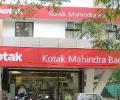
In November, Kotak Mahindra Bank had announced the buyout of ING Vysya Bank in an all-stock deal valued at Rs 15,000 crore (Rs 150 billion).

Nine of the top 10 most valued companies witnessed a combined erosion of Rs 1,63,510.28 crore in market valuation last week, with Reliance Industries emerging as the biggest laggard.

Investors became richer by over Rs 2.27 lakh crore on Monday as equities rebounded, with the BSE Sensex rallying over 1 per cent amid continuous foreign fund inflows and upbeat global markets. The 30-share BSE Sensex jumped 709.96 points or 1.16 per cent to settle at 61,764.25. During the day, it zoomed 799.9 points or 1.31 per cent to 61,854.19. Following the rally, the market capitalisation of BSE-listed firms jumped by Rs 2,27,794.46 crore to Rs 2,76,06,443.06 crore.

Growing up in the Mumbai of 1970s, Uday Kotak aspired to be a cricketer and trained under legendary coach Ramakant Aachrekar. However, it was an on-field injury which resulted in a shift to finance. He started off with bill discounting, turned to lending and successfully applied to start a universal bank in the first decade of the millennium, as India was warming up to private play in banking.

Axis Bank and ICICI Bank consumed 37-59 per cent of their operating profit for COVID-19 provisioning, while the figure is 24 per cent in case of Kotak Mahindra Bank and 10-12 per cent for IndusInd Bank and HDFC Bank.

Equity benchmark indices continued to gain for the third day running on Monday, with the BSE Sensex climbing 781 points in early trade, amid firm global market trends. The 30-share BSE Sensex was trading with a jump of 781.52 points to 53,509.50. The NSE Nifty also gained 228.2 points to 15,927.45.

>It's not easy to predict the market. But there are at least two positive factors to back the PSU banks, explains Tamal Bandyopadhyay.
